

Businesses need to stay ahead of the curve in today’s environment by maximizing efficiency and performance. One way to achieve this is through implementing Storage Area Network (SAN) devices. By leveraging SAN technology, organizations can enhance data storage capabilities, improve access speeds, and ultimately boost productivity. Join us as we delve into the world of SAN storage and discover how it can revolutionize your business operations.
What is a Storage Area Network (SAN)?
A Storage Area Network (SAN) storage device is a highly effective way to handle and contain large quantities of data within computer networks. It comprises a specialized network design that links numerous storage devices, including disk arrays and tape libraries, to servers using high-speed fiber optic cables. With this setup, organizations can centralize their storage resources and establish a unified storage pool that all connected servers can access. While competitors have a product they call SAN Storage, they are unlike Nfina’s machines. Nfinas’ SAN Storage devices are fault tolerant with no single point of failure.
Benefits of Using SAN Storage for Businesses
One of the key benefits of utilizing SAN Storage is its scalability. As your business grows, so can your storage capacity without compromising on speed or performance. Additionally, SAN allows for centralized management of all storage resources, providing a more efficient and streamlined approach to data storage. This centralized control also leads to easier maintenance and troubleshooting when needed.
Moreover, by offloading storage traffic from the main network, SAN helps optimize overall network performance, leading to faster access speeds for users across the organization.
Another significant benefit of SAN Storage is its ability to handle multiple applications and workloads simultaneously. This means that businesses can run a variety of tasks and operations without experiencing any performance issues or storage bottlenecks.
Furthermore, SAN Storage offers data redundancy, which helps prevent data loss in case of hardware failure. This is achieved through features like RAID, or in Nfina’s case, 2,3-, and 4-way mirroring, and hot-swappable components that allow for seamless replacements without disrupting ongoing operations.
Cost-effectiveness is also a major advantage of SAN Storage products. By centralizing storage resources, businesses can reduce the need for expensive individual storage solutions for each department or application. Additionally, the scalability mentioned earlier means that businesses can avoid unnecessary upfront costs by only purchasing the storage they currently need while having the option to expand as their needs grow.
Lastly, with SAN Storage, businesses can leverage advanced technology such as flash-based storage and virtualization to further enhance performance and efficiency. This translates into faster data access speeds, improved productivity, and ultimately a competitive edge in the market.
SAN Architecture
1. The architecture of Storage Area Networks (SAN) encompasses various critical components, including Fibre Channel connectors, which facilitate high-speed data transfer between storage devices and servers. Logical Unit Numbers (LUNs) play a vital role in identifying and managing storage resources within the SAN environment. The SAN fabric serves as the backbone of the network, interconnecting all devices and ensuring efficient communication. Additionally, SAN switches are integral to directing data traffic and optimizing performance across the network.
2. Access control within a SAN is predominantly fabric-based, allowing for enhanced security and management of data flows. Gateway devices are essential for connecting different types of storage networks, enabling seamless integration and communication between heterogeneous systems. The host layer represents the interface between the servers and the storage resources, ensuring that data requests are efficiently processed and routed to the appropriate storage locations.
3. One of the significant challenges in SAN architecture is addressing storage capacity bottlenecks, which can impede performance and limit scalability. Location transparency is a key feature that allows users and applications to access data without needing to know its physical location within the network. Furthermore, protocol bridges facilitate interoperability between different communication protocols, ensuring that diverse systems can work together effectively within the SAN framework.
Types of SAN Storage (Fibre Channel, iSCSI, etc.)
1. Fiber Channel is a widely used high-speed networking technology that enables rapid transmission of data between servers and storage devices. As the most common form of SAN storage, it is favored by large enterprises with demanding performance needs. The cost of implementing Fiber Channel typically includes pricey hardware components like switches, adapters, and cables.
2. The iSCSI protocol (Internet Small Computer Systems Interface) allows block-level data to be transferred over Ethernet networks using IP technology. Due to its lower cost and similar performance to Fibre Channel, it is more popular among small and medium-sized businesses. The cost of iSCSI is far cheaper than Fibre even though it includes the cost of Ethernet switches, standard network cards, ISCSI cables, and software licenses.
3. FCoE: FCoE combines the benefits of both Fibre Channel and Ethernet into one solution. Data is encapsulated in Ethernet frames, allowing it to travel over standard Ethernet networks while maintaining the reliability and performance of Fibre Channel while doing so. In addition to specialized Converged Network Adapters (CNAs) that support Ethernet and Fibre Channel protocols, FCoE SAN storage is priced similarly to iSCSI.
Others, known as Unified storage SAN arrays, combine both block-level and file-level access within a single device. This enables seamless integration into existing environments with heterogeneous workloads requiring different access methods simultaneously. With these varied options to choose from, businesses can select the most suitable SAN array for their specific requirements while ensuring optimal performance and scalability for their ever-growing data needs.
Key Features and Components of a SAN Storage System
When it comes to a Storage Area Network (SAN) system, there are several key features and components that businesses need to consider. One essential feature is centralized storage management, allowing for seamless control of data across multiple servers.
Scalability is also important, as SAN devices can easily accommodate the growing storage needs of a business without significant disruptions. Furthermore, advanced data encryption capabilities provide an extra layer of security for sensitive information stored within the SAN environment.
Nfina’s SAN systems include immutable snapshotting, geographic redundancy, and cloning functionalities for quick backups and efficient data recovery processes. These features collectively contribute to maximizing efficiency and performance in a business’s storage infrastructure.
Implementing and Setting up a SAN Storage Solution
Setting up a SAN storage system is a crucial step in ensuring optimal efficiency and performance for businesses of all sizes. The configuration process involves carefully planning the layout of storage resources, connecting servers to the SAN fabric, and allocating storage capacity as needed.
When implementing a SAN storage device, it’s essential to follow best practices to maximize its benefits. This includes selecting the right type of SAN architecture that aligns with your business requirements, ensuring compatibility between hardware components, and regularly monitoring performance metrics for any potential bottlenecks.
Troubleshooting common issues that may arise during the setup phase is also key to maintaining seamless operations. From addressing connectivity issues to optimizing data transfer speeds, having a proactive approach can help mitigate downtime and enhance overall system reliability.
Data security and backup strategies should be integrated into the setup process from the start. Implementing encryption protocols, access controls, and regular backups are essential steps in safeguarding valuable business data stored within the SAN environment.
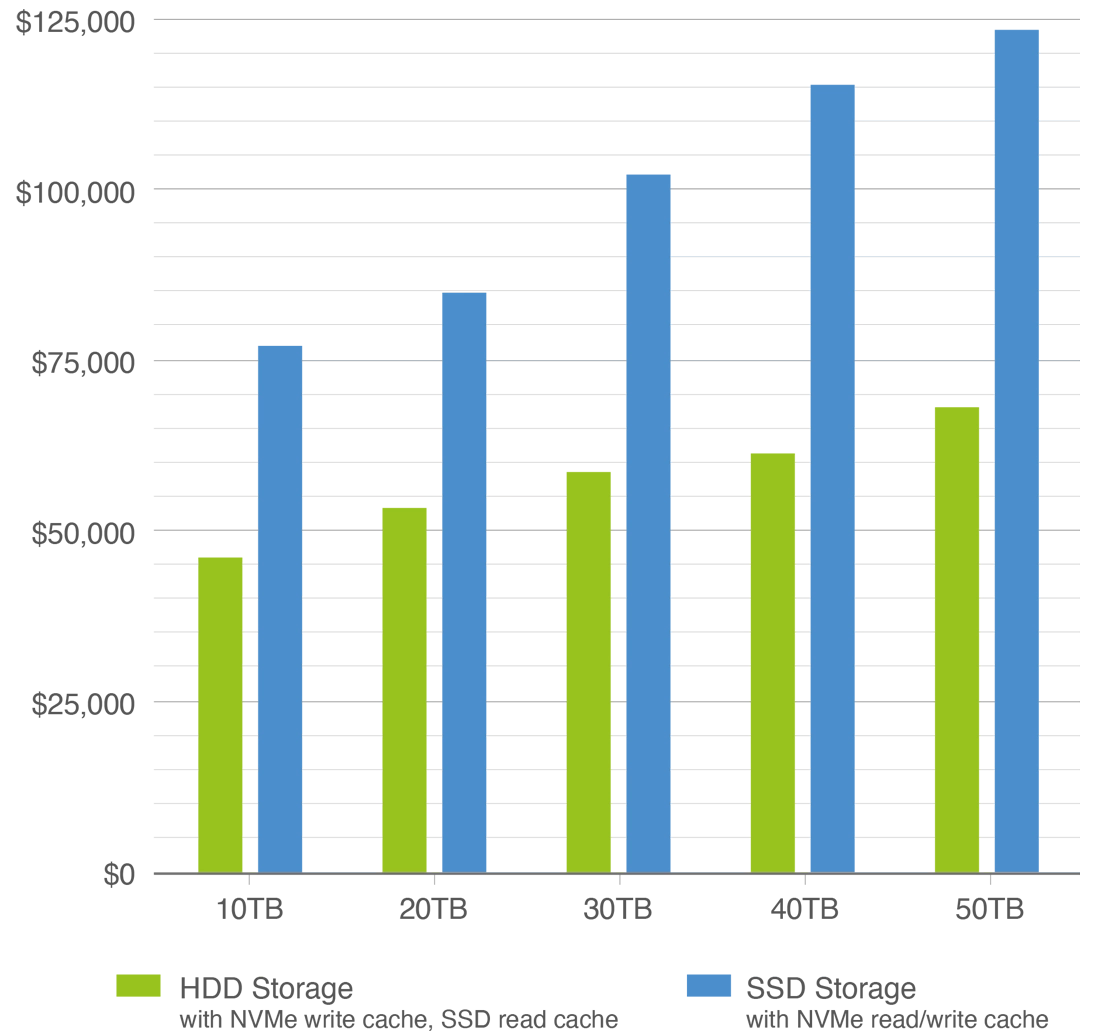
SAN storage prices can be difficult to find online since most SANs are sold as custom solutions. Below is a graph showing Nfina SAN storage prices for HDD storage and SSD storage in 10TB increments. Utilizing shared resources and allowing for centralized management, our SAN storage pricing solution reduces overall hardware costs by eliminating the need for multiple servers.
Nfina’s SAN Storage Products
Our management operating system, regardless of the SAN model, sets us apart from our competitors.
The Nfina-Store data management operating system, which we highly suggest for our storage systems, offers user-friendly features. These include the ability to create and manage SAN arrays and clusters with ease, as well as unlimited snapshots and clones at a pace of your choosing. Additionally, our setup includes Nfina’s data storage consulting team for any configuration aid needed. Most notably, in cases of natural disasters or ransomware attacks, our SAN backup protection includes immutable snapshots, georedundancy, and a rollback function that restores data to a secure point prior to the incident.
Nfina’s SAN storage products, equipped with Nfina-Store storage management software, optimize data storage access by selectively updating modified data rather than the entire SAN storage. This is made possible through our unique tiered storage and caching system which prioritizes frequently used data for faster retrieval. With Nfina’s JBODs, you can expand your system to 336 additional drives by connecting to 14 JBOD devices to a SAN solution.
By minimizing unnecessary writes, our users can efficiently back up their on-premises SANs to off-premises ones in a matter of hours instead of days. Additionally, as an added security feature within our Nfina-Store software, our server SANs operate on a copy-on-write mechanism, ensuring that only authorized data can be written onto the backup SAN solution and eliminating the risk of interception by potential thieves.